Sponsored article
One Partner or Multiple Contractors? When a Full-Service Model Simplifies Supplement Launches for International Brands
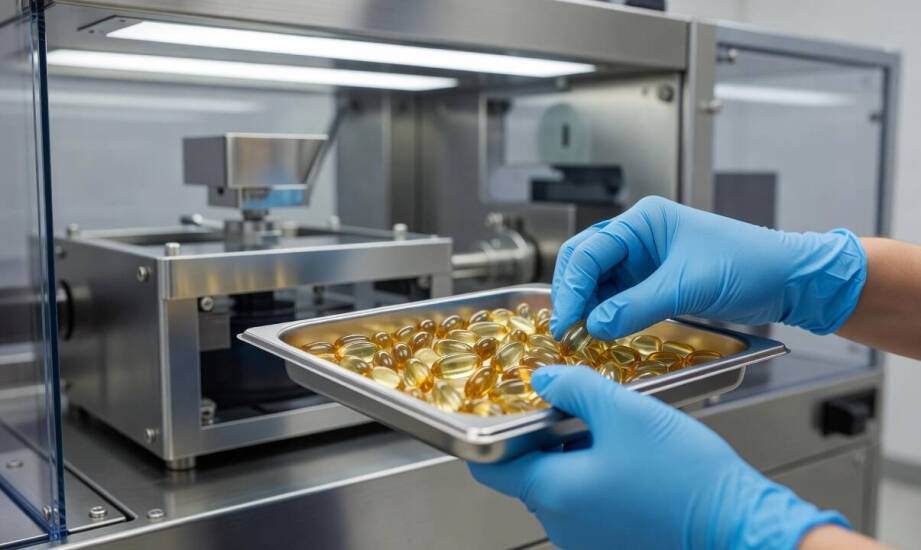
A dietary supplement brand planning to enter international markets faces an important decision regarding the scope of cooperation with its manufacturing partner. Choosing between a single provider and dividing responsibilities among several contractors affects product launch timelines, documentation workflows, and overall project management. Scaling a business in the supplement industry requires consistent quality control at every stage of product development and manufacturing.
Read more: What are the Steps in Dietary Supplements Contract Manufacturing?
What Does a Full-Service Contract Supplement Manufacturing Model Include?
A full-service model assumes that one partner is responsible for formula refinement, raw material supplier verification, manufacturing, packaging, and preparation of the required documentation. The manufacturer coordinates the entire process, from the initial technological concept to the release of the finished product, significantly reducing the client's administrative workload.
Read more: How to choose a vitamin K2 MK-7 manufacturer?
Comprehensive dietary supplements contract manufacturing services help streamline project management, particularly for companies that do not maintain their own laboratory facilities or regulatory teams.
Within this model, the contractor develops formulations tailored to the specific physicochemical requirements of the target market. Specialists select suitable excipients, stabilizers, and coating systems while ensuring that the product maintains its quality throughout its declared shelf life. The centralized approach allows all stages, from weighing and blending to forming and blister packaging, to be carried out within a single facility. Reducing inter-facility transportation lowers the risk of cross-contamination and provides a more transparent audit trail throughout the manufacturing process.
Challenges and Risks of Splitting Production Stages
Companies choosing a partial-service model typically provide an already developed formulation and independently manage selected operational stages. These may include long-term stability studies, sourcing specialized botanical extracts, or coordinating notification procedures in target countries.
Separating technological stages among independent facilities increases the likelihood of delays during production. Even a short delay at one manufacturing site may affect packaging schedules or subsequent supply chain activities. Different documentation systems, audit procedures, and quality control standards can further complicate project coordination.
Multiple audit trails can make it more difficult to verify the complete material history of a product. Responsibility for potential quality deviations is also distributed among several business entities. As a result, identifying the root cause of a manufacturing issue and implementing corrective actions can become significantly more challenging.
For products requiring strict environmental control, such as temperature- or humidity-sensitive formulations, decentralized production may increase the risk of batch-to-batch variability.
How Product Format and Export Plans Influence Manufacturer Selection
Different dosage forms, including coated tablets, vegan hard capsules, softgels, and single-dose stick packs, require dedicated technologies and specialized production expertise. Each format involves distinct process parameters and manufacturing requirements.
These may include tablet compression force, drying conditions for gelatin-based products, or sealing parameters for laminated sachet packaging. Maintaining process consistency is particularly important for pharmaceutical-sector companies and distributors supplying demanding international markets.
Regulatory requirements in regions such as Scandinavia or the Middle East often require consistent quality standards and comprehensive documentation. Certifications such as FSSC 22000, HACCP, GMP, ISO 14001, ISO 45001, as well as FDA registration where applicable, can support market access and customer confidence.
Large-scale, multi-format projects are a common part of the contract manufacturing industry. EuroPharma Alliance operates an in-house production facility in Rzeplin, supporting comprehensive manufacturing processes for dietary supplements. Working within a single certified facility can simplify documentation reviews and external audits. A partner operating under a full-service model is often able to prepare required documentation more efficiently, helping brands accelerate expansion into new markets.
Key Factors When Choosing the Optimal Cooperation Model
The complexity of the formulation, the variety of planned product formats, and the regulatory requirements of target markets all influence the most suitable manufacturing model.
Projects involving multiple dosage forms typically benefit from an integrated approach. Keeping production activities within a single facility reduces logistical bottlenecks and simplifies the maintenance of strict quality and hygiene standards throughout the process.
Dividing responsibilities among multiple suppliers may be suitable for simple formulations intended for a limited number of markets. However, this approach requires clearly defined responsibilities, carefully managed process interfaces, and precise contractual arrangements. A thorough risk assessment and realistic evaluation of internal resources are essential for making an informed decision that will affect the entire product lifecycle.
Key Takeaways
One partner can manage formulation development, manufacturing, packaging, and documentation, reducing the number of communication points.
Distributing tasks among multiple contractors increases the risk of delays, documentation inconsistencies, and more complex accountability.
Tablets, capsules, softgels, and sachets require different technologies and specialized manufacturing expertise.
An integrated model supports consistent quality, audit readiness, and compliance with export requirements.
Performing multiple manufacturing stages within one facility reduces inter-process transportation and simplifies process control.
The optimal cooperation model depends on product complexity, dosage-form diversity, and regulatory requirements in target markets.
FAQ
When does full-service dietary supplement manufacturing offer the greatest advantage?
It is particularly beneficial for complex projects involving multiple dosage forms and international distribution. A single partner simplifies coordination, documentation management, and quality control while reducing the number of operational touchpoints and potential delays.
Which responsibilities typically remain with the brand in a partial-service model?
Brands often retain ownership of the formulation, coordinate selected testing activities, and manage relationships with multiple contractors. They are also responsible for maintaining documentation consistency and overseeing project timelines across different suppliers.
Why does the product format matter when selecting a manufacturing partner?
The dosage form determines the required production technology and operational expertise. Tablets, capsules, softgels, and sachets all involve different manufacturing requirements and process controls. When a single facility can handle multiple formats, maintaining production continuity and quality consistency becomes easier.
Article categories
You might be interested

How to Prepare a Recycled-Plastic Product Specification Before Series Production

Key Benefits of Choosing Polish Mushrooms for a Seasonal Menu

The importance of flexibility in adapting pork products to customer needs