Sponsored article
Which Saint Designs Dominate in Ars Sacra's Projects?
In the world of sacred art, details are never accidental, and the iconography of saints stands as one of the strongest carriers of theological and liturgical content. Ars Sacra projects are created at the intersection of tradition, craftsmanship, and conscious symbolic narrative, where each image has specific meaning, function, and celebratory context. The selection of saint figures, their portrayal, and their relationship with the liturgical calendar create a cohesive whole, subordinated to the solemn character of the Eucharist.
What Iconographic Motifs of Saints Dominate in Liturgical Vestments?
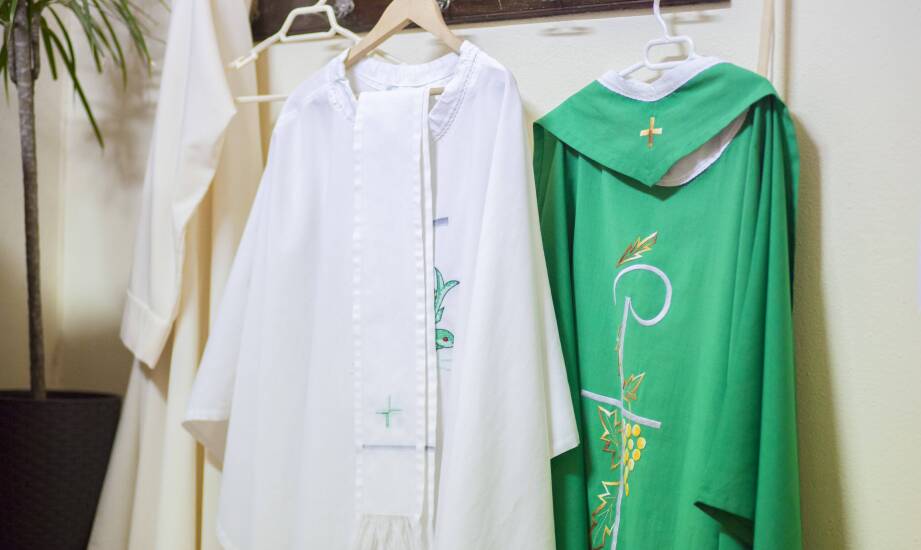
In Ars Sacra's designs, central focus is given to chasubles with saints, whose iconography has been shaped based on the centuries-old tradition of the Church and norms of sacred art. Depictions of Christ the King dominate as the theological center of the composition, emphasizing the Eucharistic nature of the vestment, along with images of saints with particular pastoral significance, such as St. Joseph, St. Thérèse of the Child Jesus, or St. Veronica. Embroidered figures are presented clearly, symbolically, and in accordance with the iconographic canon, giving the chasuble the stature of a carrier of spiritual content. The use of high-quality fabrics, including silk, wool, and cotton, ensures durability and the noble form even with intense liturgical use.
How Does Brand Identity Affect the Selection of Saint Images?
Ars Sacra's projects exhibit a clear artistic consistency and a conscious approach to selecting saints that correspond to the rhythm of the liturgical year and the character of the celebration. Patron saints of the universal Church, biblical figures, and archangels, including Archangel Raphael, symbolizing protection and healing, play a special role. Each embroidery is created with solemn Eucharistic celebrations in mind, affecting the composition, color scheme, and placement of motifs. Precision in execution and attention to iconographic details make the chasubles not only functional but also catechetical, enhancing the liturgical message through imagery.
What Role Do Saints Play in the Context of the Liturgical Year and Celebrations?
Saint motifs in Ars Sacra's projects are closely tied to the liturgical calendar and the character of specific feasts. Images integrated with the symbolism of Christmas and Easter create a coherent theological narrative, where saints accompany the mysteries of salvation. Gothic and Roman-style chasubles enable adaptation to the aesthetics of a particular community's tradition while maintaining a unified, sacred character. Such designed liturgical vestments elevate the status of the celebration, enhance its solemn dimension, and remain in full alignment with the function, place, and timing of the Eucharist.
Summary of Key Saint Motifs in Ars Sacra's Projects
Ars Sacra's projects consistently rely on canonical iconography of saints, starting with central depictions of Christ the King, through carefully selected figures of patron saints and archangels, to compositions integrated with the symbolism of liturgical seasons. The selection of motifs is derived from Church tradition, the rhythm of the liturgical year, and the character of the solemn Eucharist, and their implementation is carried out using noble fabrics and precise embroidery. The whole creates a coherent system of meanings, where sacred art, liturgical function, and high craftsmanship combine into a unified, thoughtful visual narrative, meeting both aesthetic and spiritual demands.
You might be interested

How to choose a vitamin K2 MK-7 manufacturer?
The importance of flexibility in adapting pork products to customer needs

Key Advantages of Modern Commercial Coffee Roaster Machines